Ferry Shipping News

Latest News Stay updated with our free newsletter about the ferry and ports industry

Our Mission

To support the Ferry Industry with important news ongoing, digital and free of charge.

And we are the proud organizers of the
Ferry Shipping Summit

Yes I want to receive the Ferry Shipping News for free

ICG Reports 10% Revenue Growth Driven by Freight and Container Volumes

By | 2025 Newsletter week 48 | No Comments

Irish Continental Group (ICG) recorded strong revenue growth in the first ten months of 2025, supported by higher freight and container volumes, despite weaker car carryings. Consolidated Group revenue rose to €573.0 million, up 10% year-on-year (2024: €521.0 million).

Volumes: Freight Up, Cars Down

For the year to 22 November, Irish Ferries carried 624,300 cars, a decline of 4.8% compared with 2024. RoRo freight increased 4.9% to 735,200 units. Container traffic under Eucon continued its strong growth trend, rising 16.6% to 338,100 TEU, while terminal lifts in Dublin and Belfast increased 5.8% to 324,800 units.

Divisional Performance

The Ferries Division reported €399.5 million in revenue to 31 October, up 6.3% on last year. Total revenues included customer surcharges related to fuel and EU ETS costs.

The Container and Terminal Division grew even faster, with revenues of €199.1 million, an increase of 16.2%.

Higher Net Debt After Fleet Investment

Net debt rose following fleet and asset acquisitions, including the JAMES JOYCE cruise ferry and an additional container vessel. Pre-IFRS 16 net debt reached €119.8 million, compared to €56.6 million at year-end 2024. On an IFRS basis, net debt increased to €242.3 million (2024: €162.2 million).

Source: ICG – Trading Statement 26 November 2025

Marine Atlantic Posts Stable Costs but Lower Revenues in 2024/25

By | 2025 Newsletter week 48 | No Comments
  • Revenues reached $125.2 million, down $12.1 million from last year but $5.3 million above budget. Lower passenger traffic, caused by the delayed Argentia service, offset stronger commercial volumes.
  • Expenses totalled $294.5 million, broadly in line with last year. Rising wages and benefits (+7.4%) were driven by added capacity, overtime, and staff shortages.
  • Materials, supplies and services fell by $4.4 million year-on-year due to last year’s cost of bringing ALA’SUINU into service, though costs remained above budget because of inflation and contracted services.
  • Repairs and maintenance were stable year-on-year but 11% above budget, reflecting inflationary pressure and additional work on the ageing fleet.
  • Insurance, rent and utilities saw slightly lower costs than last year, but higher than budget due to increased claims.
  • Administrative costs increased due to passenger compensation linked to ALA’SUINU’s mechanical issues and schedule disruptions.
  • Gains decreased by $6.2 milli

Noteworthy: Marine Atlantic is looking at the options for a new ferry (page 20). Another Eflexer?

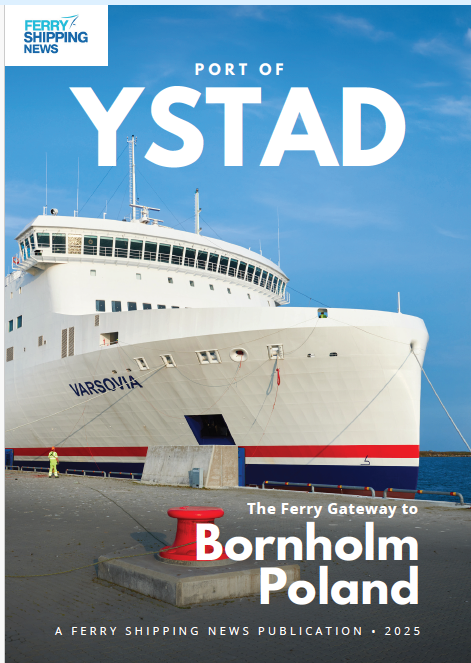
Click on cover to read the report

State Aid Supports Three Electric Ferries for Molslinjen

By | 2025 Newsletter week 48 | No Comments
  • Denmark has awarded DKK 180 million (≈ EUR 24 million) in state aid to Molslinjen under the 2025 Investment Support Scheme.
  • The funding will support the purchase of three fully electric fast ferries for the Kattegat route.
  • The scheme targets CO₂-intensive companies facing the new Danish CO₂ tax introduced in 2025.
  • The new ferries are expected to cut 132,000 tonnes of CO₂ annually once introduced after 2027.
  • The project will create one of the world’s longest and fastest fully electric ferry routes.
  • Ministers highlight the scheme as a key tool for Denmark’s green transition and industrial competitiveness.
  • The Investment Support Scheme totals DKK 1 billion (≈ EUR 134 million) between 2025–2029 and supports first-come, first-served CO₂-reduction projects.

Baleària Tests Methanol-to-Hydrogen Power Unit on CAP DE BARBARIA

By | 2025 Newsletter week 48 | No Comments
  • Baleària will install Europe’s first stand-alone e-methanol electricity generation container on the electric ferry CAP DE BARBARIA.
  • The eNomad system, developed by Methanol Reformer, reforms renewable methanol to produce hydrogen on board for auxiliary power.
  • The project turns the Ibiza–Formentera ferry into a hydrogen research platform, testing fuel cells, batteries and methanol as an energy vector.
  • The hydrogen will power a fuel cell, reducing generator use, cutting fuel consumption and lowering emissions.
  • Baleària wants to assess scalability for other ships and routes as part of its broader decarbonisation strategy.
  • CAP DE BARBARIA already operates with zero emissions in port, cutting CO₂ by 33% since 2023.
  • The initiative forms part of the BUCEMTO project, supported by EU Next Generation funds.
  • Baleària continues a multi-energy approach, combining natural gas, biofuels, electricity, hydrogen and methanol.

Godby Shipping Charters MISTRAL to Stena Line

By | 2025 Newsletter week 48 | No Comments

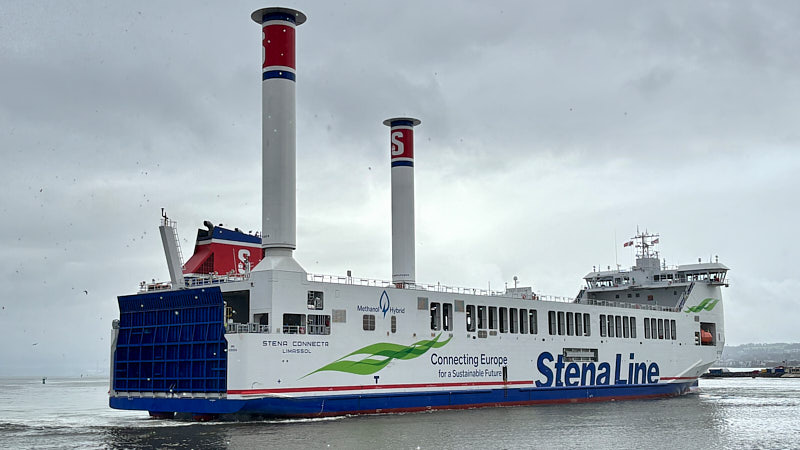
Godby Shipping has signed a one-year time charter agreement with Stena Line for the RoRo vessel MISTRAL. The deal includes an option for Stena Line to extend the charter.

Before entering service, MISTRAL will dry dock at the Remontowa shipyard in early 2026. The yard period will include standard maintenance and several energy-efficiency upgrades. New propeller blades and a redesigned bulb will be installed. Both are optimised for service speeds of 10–14 knots and will deliver notable fuel savings.

MISTRAL already features a Variable Frequency Drive, making the vessel fuel efficient even before the new modifications. The upcoming upgrades will further enhance environmental performance.

Godby Shipping states that these investments form part of a wider strategy to meet tightening regulations. CII, the EU ETS and FuelEU Maritime all increase pressure on operators to cut emissions. Optimising the existing fleet is therefore essential for compliance and competitiveness.

Under the new charter, MISTRAL will operate for Stena Line between Europoort Rotterdam and Harwich, supporting a key North Sea trade.

GNV VIRGO to Mark a New Era for LNG Bunkering in Italy

By | 2025 Newsletter week 48 | No Comments

The newly built GNV VIRGO will become the first RoPax vessel in Italy to receive ship-to-ship LNG bunkering.
On 4 December, Swiss energy trader Axpo will supply LNG using the bunker tanker GREEN ZEEBRUGGE, marking a significant milestone for the Italian ferry market.

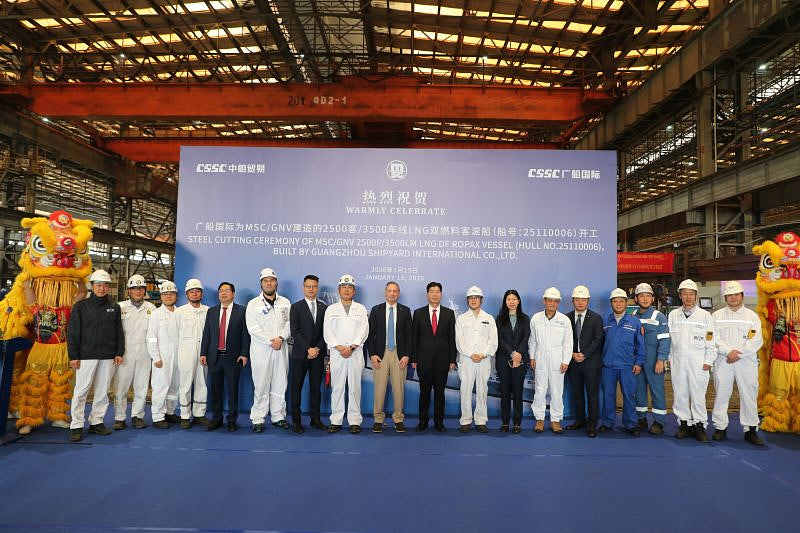
GNV VIRGO – the first LNG-powered vessel in GNV’s fleet – has arrived in Genoa after her delivery voyage from Guangzhou Shipyard International (GSI) in China. She forms part of MSC’s fleet-renewal plan, which includes eight newbuilds scheduled by 2030. The vessel follows GNV POLARIS and GNV ORION, already in service on Italian routes.

A naming ceremony will take place on 11 December in Palermo, ahead of the ship’s deployment on the Genoa–Palermo service.

Key figures

    • 52,300 GT
    • Length: 218 m
    • Beam: 29.6 m
    • Speed: 25 knots
    • 420+ cabins
    • 1,785 passengers
    • 2,770 lane metres

Stena Line and ABP Begin Work on New Immingham RoRo Terminal

By | 2025 Newsletter week 48 | No Comments
  • Stena Line and ABP will build a new £200m RoRo terminal in Immingham.
  • Immingham is becoming a key hub for Stena Line’s freight routes to the Netherlands.
  • The new Immingham Eastern RoRo Terminal (IERRT) will allow quicker sailing times and larger vessels.
  • Stena Line has signed a long-term agreement with ABP, securing operations well into the next century.
  • ABP highlights the project as strengthening UK–EU supply chain resilience.
  • The UK Government calls the investment a major boost for Lincolnshire and the North.
  • The project will create 700 construction jobs and 200 permanent roles in terminal operations.

EU Maritime Passenger Traffic Rises to 412 Million in 2024

By | 2025 Newsletter week 48 | No Comments
  • EU ports handled 412.3 million passengers in 2024, up 18.8 million (+4.8%) compared with 2023.
  • Traffic remains 1.4% below 2019 levels, showing continued recovery after the COVID slump.
  • Ten EU countries with more than 10 million passengers each accounted for 95.4% of all seaborne passenger movements.
  • Italy led with 93.5 million passengers (22.7%), followed by Greece with 81.1 million (19.7%).
  • Denmark ranked third with 41.3 million passengers (10.0%).

Source: https://ec.europa.eu/eurostat/en/web/products-eurostat-news/w/ddn-20251127-1

Digitisation or Digitalisation? A Useful Distinction

By | 2025 Newsletter week 48 | No Comments

At the Ferry Shipping Summit, both digitisation and digitalisation were used frequently — often interchangeably. In many languages there is no real distinction between the two terms. In English, however, they do mean different things, and understanding the difference helps clarify what kind of change we are really talking about.

Digitisation is the simple part: it means converting something analogue into a digital format. Scanning paper documents, creating digital tickets, or installing sensors that replace manual readings are all examples of digitisation. The underlying process stays the same; only the medium changes.

Digitalisation, on the other hand, goes further. It is about using digital tools to transform the way an organisation works. When ferry operators introduce automated check-in, predictive maintenance, or integrated booking and logistics platforms, they are not merely converting information — they are redesigning processes. Digitalisation changes workflows, decisions, customer interaction and, ultimately, business models.

Put simply:

  • Digitisation = analogue to digital conversion
  • Digitalisation = process and business transformation enabled by digital tools

UK Confirms ETS Rules for Domestic Maritime From 2026

By | 2025 Newsletter week 48 | No Comments

The UK Emissions Trading Scheme (UK ETS) Authority has published its final policy decisions on how domestic maritime transport will enter the national carbon-pricing system. The document explains which vessels are covered, how operators must report emissions, and what transitional measures will apply as the sector joins the UK ETS.
From 1 July 2026, all ships of 5,000 GT and above will fall under the scheme for domestic voyages and in-port emissions. This includes most large ferries, although essential island and peninsula services in Scotland will be temporarily exempt because of their vital social function. Voyages between Great Britain and Northern Ireland will receive a 50% deduction, preventing price disparities on cross-Irish Sea ferry routes.

The UK ETS Authority also confirms its intention to extend the system to international voyages from 2028, subject to consultation and alignment with the EU ETS. This could eventually bring major ferry corridors such as the UK–France, UK–Ireland, and UK–Benelux routes into the scheme.

Operators will benefit from a two-year transitional “double-surrender” period (*), giving extra time for reporting and compliance. The ETS cap will rise by 9.32 million allowances to accommodate maritime emissions, strengthening long-term incentives for cleaner vessels, alternative fuels and operational efficiencies.


(*) Double-surrender explained

  • Maritime enters the UK ETS on 1 July 2026.
  • Instead of requiring surrender by April 2027, the UK will delay the first surrender deadline by one year.
  • Operators will surrender allowances for both 2026 and 2027 at the same time.

Source: UK Government

IMAGE CARDS

By | 2025 Newsletter week 48 | No Comments

Damen Advances BC Ferries Island Class Programme with Launch of Ninth Vessel

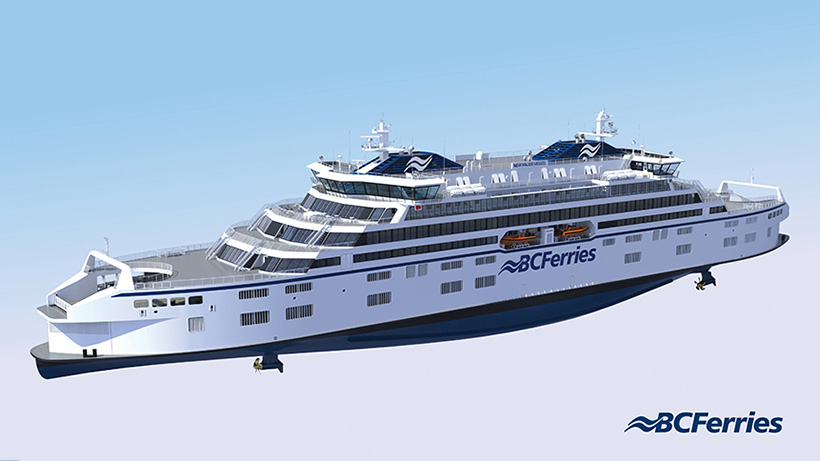
Damen has launched ISLAND CLASS 9 at its Galati yard, marking the latest milestone in the BC Ferries newbuild programme. The vessel is part of a four-ship order based on the Damen 8117 (E3) electric-ready design, with ISLAND CLASS 10 also progressing following its block assembly in October. Upon delivery, the hybrids will be prepared for future full-electric operation and will serve the Gabriola Island and Quadra Island routes.

EUROCHAMPION JET 2 (Ex SKANE JET) Arrived in Greece

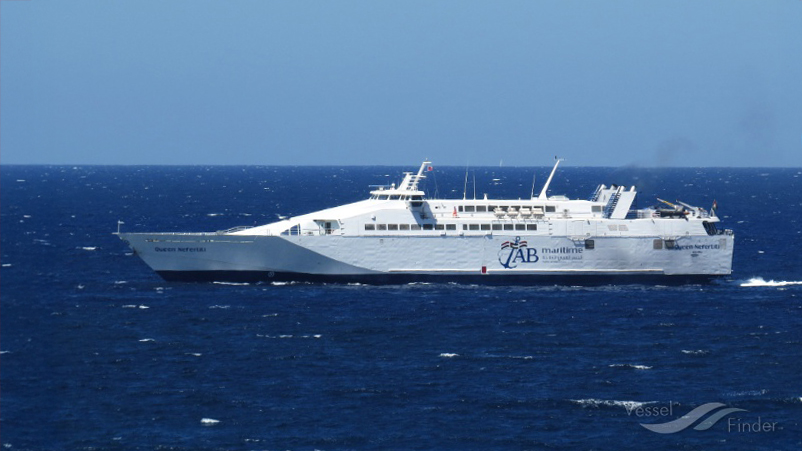
On 23 November 2025, the high-speed vessel EUROCHAMPION JET 2 (ex SKANE JET) arrived at the Port of Piraeus. SEAJETS purchased her from FRS last October, and she is expected to join the Hellenic Coastal Shipping network.

EUROCHAMPION JET 2 is one of the world’s fastest car-carrying passenger vessels and holds the eastbound record for the fastest transatlantic crossing. Built by Incat (Australia) in 1998, she can carry 900 passengers and 240 cars, operating at 41 knots (maximum 48 knots).

Photo: Anastasios Anastasiou

GOLDEN CARRIER Chartered to GNV

On 22 November 2025, GOLDEN CARRIER (ex WOLIN), operated by A-Ships Management, departed Perama for Italy. The RoPax vessel has been chartered to GNV for a short period, as the Italian operator aims to strengthen its presence on the highly demanded Naples–Palermo passenger and freight route with a third ship.

Purchased last March from Polish operator Unity Line and built in Norway in 1986, GOLDEN CARRIER has capacity for 370 passengers and 1,770 lane metres, with a service speed of 18 knots.

Photo: Kostas Papadopoulos

VENIZELOS Returns to Greece

On 26 November 2025, the large ferry EL. VENIZELOS returned to Greece, heading to Elefsis Shipyards (ONEX). The vessel had been on a bareboat charter to Algerie Ferries since May 2025, operating on the Alicante–Oran route.

According to available information, the vessel’s arrival in Elefsina is related to technical and operational requirements. It remains unclear whether she will be deployed again on a Greek domestic line or chartered abroad. The ferry will undergo inspections, maintenance, and possible upgrades in preparation for her next assignment.

Photo: Voyager – Christos Chatzaras

Contract Signed for New Fully Electric Ferry

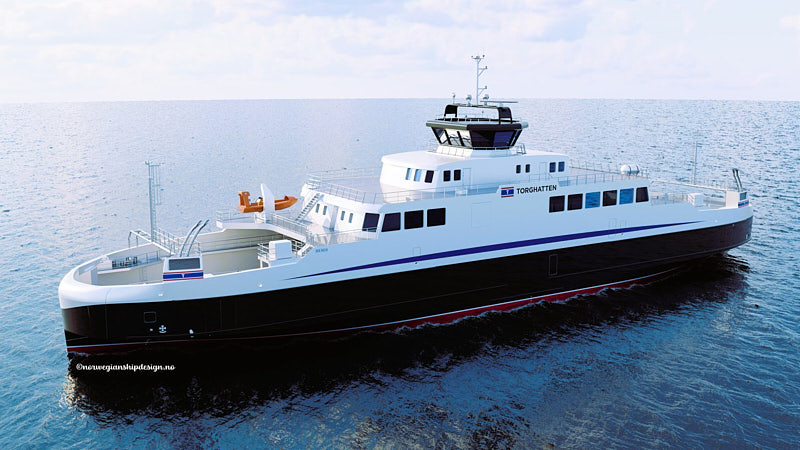
Torghatten Nord has signed a contract for a new NSD 60CFE Gen 2 fully electric ferry, designed by Norwegian Ship Design. The vessel will be built at Özata Shipyard in Istanbul, where the steel-cutting ceremony also took place this week. It is the yard’s third Torghatten ferry using NSD design.

Corsica Ferries Acquires STENA VISION

Corsica Sardinia Ferries has indeed purchased the RoPax STENA VISION from Stena Line and will be renamed MEGA SERENA. The ferry was built in 1987

Stena Line Names STENA FUTURA at Belfast Harbour

Over 200 guests attended the official naming ceremony of Stena Line’s newest vessel, STENA FUTURA, at Belfast Harbour. The event marked a major step in the company’s 30-year partnership with the port and in its wider push towards sustainable shipping.

The 147-metre STENA FUTURA is the first of two next-generation “NewMax” freight vessels designed for the Belfast–Heysham route. The ship is methanol-ready and fitted with hybrid propulsion, battery capability and shore-power connections. Stena Line expects these technologies to support its target of a 30% CO₂ reduction by 2030.

The vessel was named by its Godmother, Dr Madeleine Olsson Ericksson, a member of the Olsson family who own Stena Line. Among the guests were the Deputy Lieutenant of the Borough of Belfast, Dr Philip McGarry, the First Minister Michelle O’Neill, the Deputy First Minister Emma Little-Pengelly, and Dr Theresa Donaldson, Chair of Belfast Harbour Commissioners.

The ceremony also celebrated 30 years of Stena Line operations in Belfast, marking three decades since the company moved its services to the city in 1995.

Photo Scott Mackey

STENA SAGA as SAGA X

Bridgemans Floatel, a division of Bridgemans Services Group announced the successful completion and Canadian arrival of SAGA X, the company’s second Canadian floatel. The ferry is the former STENA SAGA.

Over the past four months alongside, every cabin, common area, and system on board has been rebuilt and upgraded.

The vessel now features shore power connectivity, industrial heat pumps eliminating diesel use while alongside, a state-of-the-art sewage treatment plant, advanced water-making and filtration systems, and a comprehensive waste management plan to reduce waste and maximize recycling.

Source: Bridgemans

FERRY PORT GALLERY

FERRY, ROPAX AND RORO GALLERY